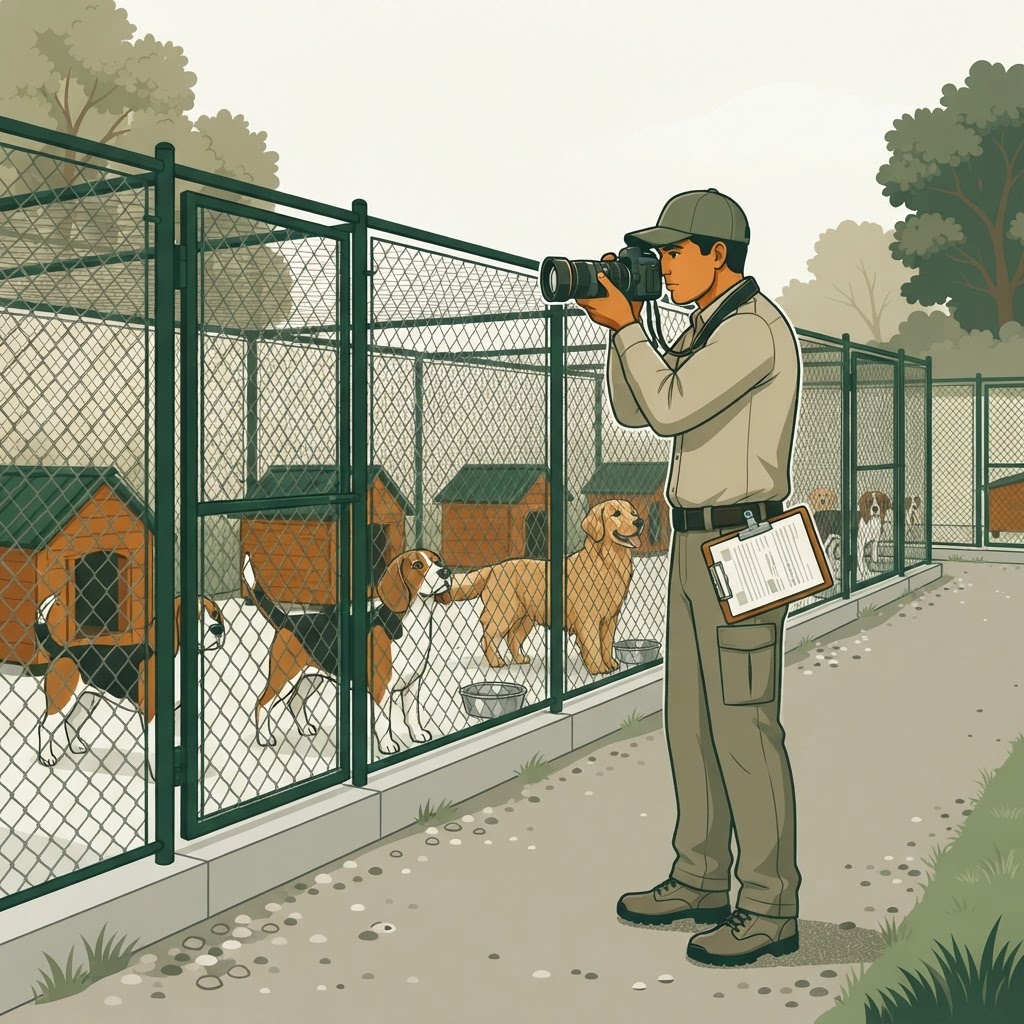
Buried inside USDA's September 21 announcement on the future of Animal Welfare Act enforcement was a short line that deserves more attention than it got: USDA Animal Care inspectors have resumed photographing noncompliances. That may sound like a minor procedural change. It isn't. A photograph can become part of the evidence supporting a citation, an appeal, an investigation, and potentially a future enforcement action.
Buried inside USDA's September 21 announcement on the future of Animal Welfare Act enforcement was a short line that deserves more attention than it got: USDA Animal Care inspectors have resumed photographing noncompliances. That may sound like a minor procedural change. It isn't. A photograph can become part of the evidence supporting a citation, an appeal, an investigation, and potentially a future enforcement action.
USDA Already Has This Authority. This is not a new legal power. Under 9 C.F.R. § 2.126(a)(4)–(5), licensees must allow APHIS officials "to inspect and photograph the facilities, property and animals, as the APHIS officials consider necessary to enforce the provisions of the Act," and "to document, by the taking of photographs and other means, conditions and areas of noncompliance." USDA has simply announced that it is resuming active use of authority it has held for decades, as part of a broader push to strengthen inspection documentation.
When the Guide Requires a Photo. USDA's current Animal Welfare Inspection Guide (revised June 2025, Section 2.5.1) directs inspectors to photograph or video a noncompliance in these situations, and generally only these: Direct, Critical, or Repeat NCIs, if photographable; NCIs at a facility with an ongoing Investigative and Enforcement Services (IES) case or one pending with the Office of the General Counsel; any NCI where the inspector and licensee disagree and the licensee indicates he or she will, or is likely to, appeal; all NCIs cited at commercial airline carrier inspections; and veterinary-care NCIs — every animal covered by the citation must be photographed, both for identification and to document the specific condition.
Disputed Citations Get Special Treatment. USDA's own procedures single out disagreements: if there is a dispute between inspector and licensee and the licensee signals an intent to appeal, a photograph must be taken. USDA's own guide recognizes that photographs matter most precisely when the facts are contested. Licensees should recognize the same thing.
One Camera Doesn't Tell the Whole Story. A USDA photograph documents what USDA chose to photograph. That doesn't make it wrong — but photographs can require context. A close-up of a damaged surface may not show the whole enclosure. A photo of an animal may capture a visible condition without showing when it began, what treatment had already been given, or what the attending veterinarian had directed. The moment USDA photographs a condition that may become a citation, consider building your own accurate record of the same condition: wide and close-up photos, identification of the animal or enclosure, relevant veterinary and maintenance records, and photos/documentation of any corrective action, including when it happened. The goal is never to manufacture a competing story — it's to preserve the complete one.
Veterinary-Care Citations — Questions to Ask Immediately: Was the attending veterinarian previously contacted? Is the condition addressed in the Program of Veterinary Care? Was treatment already underway? Are treatment records available? When was the animal last observed, and by whom? When was the condition first noticed, and when was the vet contacted — and what did they instruct?
Correcting a Condition Doesn't Erase It. Fixing a condition five minutes after USDA photographs it doesn't erase what the inspector observed — but the correction can and should be documented too. A useful record shows a timeline: condition observed → USDA photograph → licensee photograph → corrective action → completed correction → supporting documentation. That preserves the sequence instead of leaving only a single moment in USDA's file. Use the exit interview: ask which regulatory provision is at issue, and which animal, enclosure, record, or condition. Take notes. Preserve documents. And build your own photographic record while conditions are still available to document.
Editor's Note — Verification & One Addition. The legal and procedural claims checked out against primary sources: 9 C.F.R. § 2.126(a)(4)–(5) matches verbatim, and the June 2025 Animal Welfare Inspection Guide, Section 2.5.1, confirms every photography trigger listed above word-for-word. One thing worth adding: the current Inspection Guide (Sections 2.5.2, 2.5.3, and 2.7) does direct inspectors, as a matter of internal policy — not regulation — to show photos/videos to the licensee during the exit interview, and it lets a licensee formally request copies of photos uploaded to eFile (by email, printed pages, or flash drive). It's not an enforceable right, but it is current USDA practice licensees can and should ask for.
The Inspection Is Becoming an Evidentiary Event. USDA has trained 98 inspectors through a new four-part refresher program, deployed new inspector job aids and knowledge checks, stood up the Animal Protection Bureau, increased enforcement coordination, and resumed photographing noncompliances. Taken together, USDA is placing real emphasis on the evidentiary record behind enforcement. When USDA documents the inspection, document it yourself — without interfering with the inspector, staging photos, or altering conditions before you've accurately recorded them. Good compliance documentation has always mattered. It may matter more than ever now.